Senegal’s Broken Tandem – How Sonko and Faye Became Rivals
- Governance Magazine Politics Politics & Governance
admin
- 0
- 16 minutes read
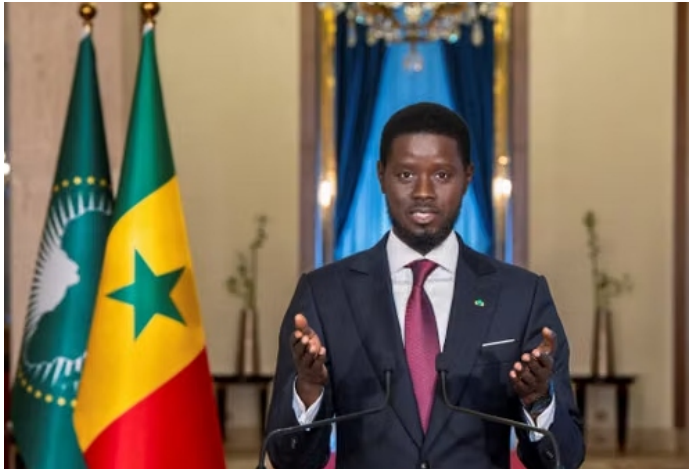
By Allieu Badara Sowe in Banjul
For more than a decade, Ousmane Sonko and Bassirou Diomaye Faye were political comrades bound by a shared conviction that Senegal needed a rupture with the political establishment that had governed the country for generations.
They built a movement together, endured repression together and, at moments when their political future seemed darkest, went to prison together. In the 2024 presidential election, their partnership was distilled into a simple slogan as “Sonko is Diomaye, Diomaye is Sonko.”
And, it worked.
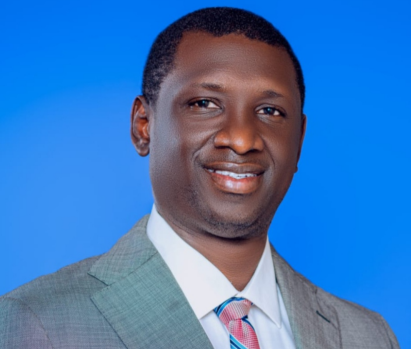
Faye, once the comparatively obscure Secretary-General of their Pastef party, won the presidency in a first-round landslide after Sonko was prevented from running. Sonko became prime minister, the most powerful political figure in the country after the president and, for many of the movement’s supporters, the true architect of the revolution they believed they had begun.
Two years later, the slogan has become a relic.
In May 2026, Faye dismissed Sonko as prime minister, bringing an abrupt end to one of Africa’s most consequential political partnerships. Sonko quickly re-emerged as president of the National Assembly, giving him control of the legislature while Faye retained executive power. In July, Faye went further, launching his own political party, Kiiraay–The Republican Patriots, formally breaking ranks with the Pastef movement led by Sonko.
Senegal, long celebrated as one of West Africa’s more stable democracies, now has two rival centers of political authority.
The question is no longer whether Sonko and Faye have fallen out. That is settled. The question is what their divorce will do to Senegal. Up for discussion is custody of the Senegalese people’s trust.
To understand the bitterness of the present confrontation, it is necessary to remember how unlikely the partnership once seemed to fail.
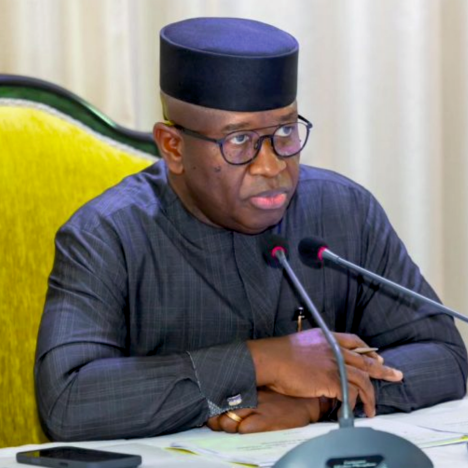
Sonko was the charismatic outsider. A former tax official, he founded Pastef in 2014 and built a reputation as an uncompromising critic of Senegal’s political elite. His message combined economic nationalism, anti-corruption politics, African sovereignty and a rejection of what he portrayed as excessive dependence on France and Western institutions.
Faye was different. More reserved and less famous, he worked inside the movement as a trusted strategist and senior party official. Their political fortunes became inseparable.
The government of President Macky Sall increasingly treated Sonko as a serious threat. His legal troubles eventually prevented him from contesting the 2024 presidential election. Faye, meanwhile, was imprisoned during the political turmoil surrounding the election. When both men emerged from detention shortly before the vote, they transformed what might have been a political catastrophe into an extraordinary electoral campaign.
But because Sonko could not run, Faye ran in his place. The message to supporters was that the individual candidate mattered less than the political project. Faye won with about 54 percent of the vote in the first round, becoming president without having previously held elected office. Pastef subsequently secured a commanding parliamentary majority, winning 130 of the National Assembly’s 165 seats in the 2024 legislative election.
The arrangement seemed straightforward; Faye would occupy the presidential palace; Sonko would lead the government; together they would implement the program that had brought their movement to power.
But governing exposed a problem that opposition politics had concealed. There was never complete agreement about who ultimately embodied the movement. For years, Sonko had been the undisputed political star. Faye’s rise was made possible by Sonko’s decision to place the movement behind him. Yet once Faye became president, the constitutional powers of the presidency gave him an authority that could not easily be shared.
The movement had been built around the two men. The first signs of the rupture emerged gradually. The disagreements were partly personal and partly ideological. Faye began seeking greater autonomy from Pastef, while Sonko remained the party’s central political figure.
In July 2025, Sonko publicly complained that he lacked sufficient authority to govern and accused the administration of drifting away from the movement’s original ideals. Later that year, Faye revived the “Diomaye President” coalition that had helped carry him into office, distancing himself from Pastef’s organizational structure.
The symbolism was unmistakable. Sonko had built the party. Faye controlled the presidency. Each man was beginning to construct a political machine that could operate without the other. The disagreement also reflected a genuine difference in political temperament.
Sonko’s politics have remained rooted in sovereignty and confrontation with established economic and geopolitical arrangements. He has advocated a much more radical transformation of Senegal’s relationship with foreign powers and international financial institutions.
Faye has increasingly appeared more pragmatic. That distinction became particularly sharp as Senegal’s economic problems worsened. When Faye and Sonko came to power, they inherited a fiscal situation far more precarious than the previous government had acknowledged. Audits revealed billions of dollars in previously underreported borrowing. Senegal’s debt burden subsequently climbed above $13 billion, according to Reuters, while negotiations with the International Monetary Fund became increasingly urgent.
The IMF issue became a political fault line. For Faye, international financing and negotiations offered a practical route through a dangerous fiscal crisis. For Sonko, accepting the terms and logic of international financial institutions risked undermining the sovereign economic transformation for which their movement had campaigned.
The disagreement was not merely technical. It was a dispute over what their revolution was supposed to mean. Consequently, the debt crisis turns political. Senegal’s economic predicament made the political quarrel much more consequential.
The country has struggled to regain access to international debt markets and has relied increasingly on domestic and regional borrowing. A previous $1.8 billion IMF program was suspended after the revelation of the hidden debt, leaving the government under pressure to negotiate a new arrangement.
Sonko became increasingly vocal in his opposition to the direction of the government’s economic policy. Faye, facing the realities of running a state, moved toward a more conventional strategy of fiscal management and negotiations.
That created an impossible political triangle. The government needed money. And the president needed room to negotiate. But the prime minister needed to remain faithful to the movement’s sovereignty-first message. By around April of 2026, the relationship had become extremely difficult to sustain.
Sonko’s influence remained enormous. He still led Pastef, the party that controlled parliament, and retained a loyal following among the young Senegalese voters who had powered the movement’s rise. Faye, meanwhile, had the constitutional authority of the presidency but lacked the political base that Sonko had accumulated over years of opposition.
Neither man could simply subordinate himself to the other. The eventual confrontation came in May. On May 23, 2026, Faye dismissed Sonko and dissolved his government.
The announcement, delivered unexpectedly on public television, formally ended the political partnership that had begun twelve years earlier. But Faye’s move did not eliminate Sonko. It only changed his battlefield. Within days, Sonko returned to the National Assembly and was elected its president. His party still controlled the legislature, giving him a formidable institutional platform from which to challenge the president.
The result was an unusual division of power. Faye had the presidency. Sonko had parliament. The man Faye had removed from the executive branch now occupied the second-highest constitutional position in the state.
The new prime minister, economist Ahmadou Al Aminou Lo, formed a government without Pastef ministers after Sonko’s party announced that it would not participate. The rupture was now complete. Yet the political system did not collapse. That matters.
Senegal’s institutions have continued to function, even as the rivalry has intensified. The conflict has been fought through parliamentary votes, constitutional challenges, party meetings and competing political organizations rather than through an outright breakdown of democratic government.
But the institutional struggle has become increasingly sharp.
One of the clearest demonstrations of the new power struggle came in June. Pastef-backed lawmakers passed a constitutional amendment designed to strengthen parliament and reduce presidential powers. The proposed changes included greater parliamentary oversight of resource agreements, expanded powers for legislative inquiries, and tighter restrictions on the president’s ability to dissolve the National Assembly.
The reform also proposed replacing Senegal’s Constitutional Council with a Constitutional Court. Supporters presented the changes as democratic reform. Critics saw them as an attempt by Sonko’s parliamentary majority to constrain a president with whom it was now openly at war.
The dispute eventually reached the Constitutional Council, which rejected the proposed amendment in July, ruling that it was unconstitutional and effectively stopping the planned referendum. The episode revealed the basic structure of Senegal’s new political conflict.
Faye can block Sonko’s parliamentary ambitions through presidential and institutional authority. Sonko can constrain Faye through his parliamentary majority. Each possesses a legitimate source of power. Neither possesses all of it.
Faye has begun to build a new political home. The decisive development came in July. Faye launched Kiiraay–The Republican Patriots, creating a party independent of Sonko’s Pastef. The move transformed a personal and institutional quarrel into a full political realignment.
Several Pastef officials had already moved toward Faye’s camp, including regional figures and members of the party’s youth wing. Former members of the old ruling establishment have also shown interest in the new presidential movement.
Faye’s calculation appears clear – if he is to govern without Sonko, he needs a political base of his own. The presidency alone may not be enough. The 2027 local elections will provide the first major test of whether Faye can translate presidential authority into a durable electoral organization. Beyond them lies the larger question of 2029.
That is the election hanging over virtually every calculation in Dakar. For years, Sonko’s supporters had imagined him as the natural political heir to the movement after helping Faye become president. But Faye is now a sitting president with his own party.
The former “Plan B” is no longer acting like a caretaker for somebody else’s political project. He is building his own. At the heart of the rivalry is an unresolved question of who gets to define the future of the movement?
Sonko has never stopped being the central ideological figure of Pastef. His supporters see him as the politician who fought the old system, endured imprisonment and created the movement that ultimately captured the state. Faye has a different claim. He won the presidency. He is the head of state.
He can argue that the 2024 election gave him a personal mandate, not merely a mandate to implement Sonko’s political vision. The two interpretations cannot easily coexist.
The prospect of a 2029 presidential contest therefore casts a long shadow over today’s disputes. Analysts increasingly see the current struggle as an early contest for political supremacy before the next presidential election.
The danger is that every policy disagreement becomes an electoral calculation. Every cabinet appointment can be interpreted as a declaration of allegiance. Every parliamentary vote can become a test of strength. Every speech by Sonko can be heard as a campaign speech. Every new alliance created by Faye can be seen as preparation for 2029.
However, it would be tempting to reduce the conflict to two ambitious politicians who could no longer share power. That would be too simple. The Faye-Sonko struggle represents a deeper argument about what Senegal’s political transformation should become.
Sonko’s camp emphasizes sovereignty, institutional change and a fundamental break with the economic and political practices of the past. It wants the state to exercise greater control over natural resources and to reduce dependence on foreign institutions.
Faye’s camp increasingly emphasizes institutional stability, economic pragmatism and the need to govern within the constraints imposed by Senegal’s financial reality.
Neither position is inherently illegitimate. Indeed, both emerged from the same electoral revolt. That is what makes the split so painful for the movement’s supporters. The people who voted for change did not vote for two competing versions of change. They voted for one.
Now they are being asked to choose between either. For Senegal, the immediate challenge is to ensure that political competition does not become institutional paralysis.
The country faces serious economic pressures at precisely the moment its political leadership is divided. The debt problem has not disappeared with Sonko’s dismissal. The IMF negotiations remain important. Senegal must still convince creditors and investors that it can restore fiscal credibility while protecting social stability.
The political leadership must also deliver on the promises that brought the movement to power; especially jobs, stronger governance, an assault on corruption and a greater national benefit from oil, gas and mineral wealth.
Those promises were easier to make from opposition. They are harder to fulfill in government. The country’s young population, which formed the emotional core of the political revolt against the old establishment, is unlikely to be satisfied indefinitely by arguments about institutional procedure. It wants results.
That may ultimately determine which of the two men survives politically.