The Bill at the Centre of Sierra Leone’s Political Storm
- Governance Politics Politics & Governance
admin
- 0
- 18 minutes read
Written by Sam Brima and a team of researchers
Not until Monday 17 August did anything happen to breathe air into the tension when Sulaiman Banja Tejan-Sie, lawyer and former Secretary General of the ruling Sierra Leone Peoples Party, SLPP described the parliamentary proceeding deepening the Constitution Amendment Bill row as “comedy of errors”.
It remains to be seen whether Tejan-Sie’s intervention will make any meaningful impact to calm the storm.
For a country that has spent decades trying to make constitutional democracy synonymous with stability, Sierra Leone has arrived at an uncomfortable moment – the Constitution itself has become the centre of a political crisis.
The immediate dispute concerns the Constitution of Sierra Leone (Amendment) Bill, 2025, a sweeping package of proposed changes that Parliament has been considering since early 2026. The confrontation reached its most dramatic point on 10 August, when opposition lawmakers walked out of Parliament amid a dispute over the voting threshold required to amend the Constitution.
The Speaker, Segepoh Solomon Thomas, ruled that the Bill could be dealt with by a simple majority of Members present and voting rather than the two-thirds threshold the opposition says the 1991 Constitution requires. Parliament subsequently proceeded with the Bill, which was reported as passed.
But the story did not end with the vote. Instead, the parliamentary decision opened a second front – a constitutional battle over the constitutional amendment process itself. The Speaker referred the question to the Supreme Court for an opinion, while lawyers and opposition figures have had a field day challenging the interpretation of Section 108 of the Constitution.
The result is a political paradox. A Bill intended by its sponsors to strengthen Sierra Leone’s democratic institutions has itself become the source of a major argument about whether those institutions are respecting the rules that govern them.
The origins of the current crisis stretch back well beyond the parliamentary chamber. Sierra Leone’s 1991 Constitution emerged from a period of political instability and military intervention. Its restoration and subsequent operation became part of the country’s long journey from civil war to competitive multiparty politics. But successive governments have also acknowledged that the constitutional framework contains weaknesses requiring reform.
The present package draws on a long-running constitutional review process, including recommendations associated with the Cowan Constitutional Review Committee and, more recently, the Tripartite process established after the disputed 2023 elections.
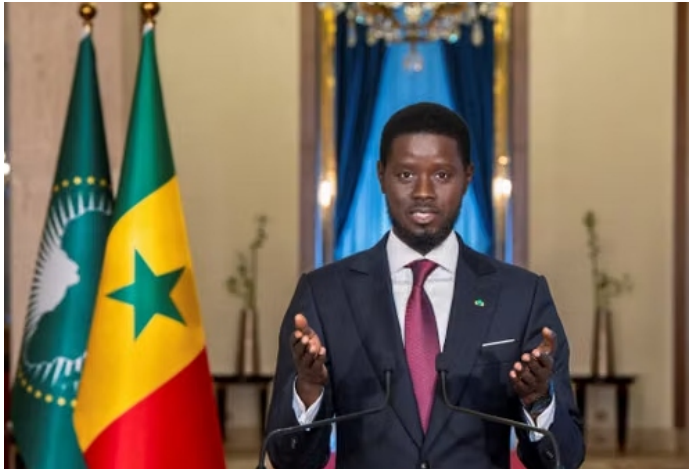
President Julius Maada Bio has argued that the proposed changes are therefore not the invention of one government or one political party, but the product of years of consultation. In a national address on 9 August, he described the Bill as the culmination of decades of national dialogue and urged MPs to vote for it in the interests of future generations.
The government’s official constitutional reform platform similarly presents the exercise as a broad modernisation project involving electoral governance, rights, decentralisation, justice, political participation and economic development.
That argument has considerable force. Sierra Leone’s political system has experienced repeated disputes over elections, representation and the independence of electoral institutions. The proposed Bill attempts to address several of those issues at once.
Yet, the breadth of the reform may also explain why the political stakes have become so high. This is not a minor technical amendment. The Bill proposes changes to the way presidential elections are won, how parliamentary representation is organised, how electoral commissioners are appointed, how political parties nominate candidates and how power is transferred after an election.
It also proposes constitutional protection for greater women’s political representation and rules designed to constrain the powers of an outgoing president during the transition to a new administration. In other words, the Bill touches the machinery through which political power is acquired, exercised and transferred.
That, perhaps, is precisely why the argument over procedure matters so much. The proposed reforms are extensive.
One of the most significant changes concerns the Electoral Commission. The Bill would establish a Search and Nomination Committee involving representatives from religious bodies, the legal profession, civil society, the private sector or labour, the media, youth groups and women’s organisations. The stated purpose is to make the appointment of electoral commissioners more transparent and less dependent on direct presidential discretion.
The Bill also proposes qualifications and age limits for electoral commissioners, together with staggered five-year terms. Political parties would face a constitutional requirement that at least 30 per cent of their nominees for national and local elections be women.
For Parliament, the Bill proposes a shift toward proportional representation, with the detailed electoral mechanism to be established by legislation. This is one area the opposition frowns at with the argument that it alienates the citizenry from representation as candidatures will be determined by party instead of constituents.
Presidential elections would also change substantially. Instead of the current 55 per cent threshold, the proposed system would require a candidate to win a simple national majority while also obtaining at least 20 per cent of valid votes in at least two-thirds of Sierra Leone’s districts.
The Bill would also permit independent presidential candidates, establish a fixed electoral calendar, and create more detailed timelines for presidential petitions and run-off elections.
Another notable proposal concerns the period between an election and the inauguration of the incoming president. During that transition, the outgoing president would be restricted from making major constitutional appointments, entering major contracts or international agreements, altering public institutions or taking other steps that could bind the incoming administration.
The police and armed forces would also be explicitly required not to act in a partisan manner or advance the interests of political parties.
On paper, these are reforms aimed at precisely the problems that have made Sierra Leone’s politics contentious; electoral credibility, inclusion, institutional independence and peaceful transfers of power. But politics is rarely decided by what a law says on paper alone.
When MPs began debating the Bill in July, the argument quickly narrowed around the electoral system.
International IDEA’s ConstitutionNet reported that lawmakers remained divided over the proposed presidential threshold, the move toward proportional representation and the proposed system for appointing electoral commissioners. Parliament also struck out a provision that would have effectively prevented independent candidates from running for the presidency.
While those disagreements were important, another question gradually became more consequential. How many votes does Parliament actually need to amend the Constitution?
Under the opposition’s interpretation, Section 108(2)(b) requires constitutional amendments to receive the support of not less than two-thirds of Members of Parliament at the relevant readings. The parliamentary leadership eventually adopted a different interpretation, holding that the Bill could be passed under the ordinary majority rule applicable to Members present and voting.
That difference is not a footnote. It goes to the heart of the constitutional order. The ordinary rule under Section 91 is that questions in Parliament are determined by a majority of Members present and voting, except where the Constitution provides otherwise. Section 108, however, deals specifically with constitutional alteration.
The legal controversy is therefore about whether Section 108 imposes a general two-thirds parliamentary hurdle on constitutional amendments or whether that higher threshold applies only in particular circumstances.
The Speaker’s 10 August ruling adopted the latter interpretation. He subsequently referred the underlying constitutional question to the Supreme Court while critics maintain that the logic is fundamentally flawed.
The Institute for Legal Research and Advocacy for Justice has argued that Section 108(2)(b) expressly contains the two-thirds requirement and that Section 108(3), which the Speaker’s reasoning reportedly relied upon, instead concerns referendum requirements for specially protected constitutional provisions.
The distinction is crucial. There can be two separate safeguards – one requiring a supermajority in Parliament and another requiring the people themselves to approve certain entrenched provisions in a referendum.
If that interpretation is correct, the question is not merely whether Parliament followed a preferred parliamentary procedure. It is whether Parliament complied with a mandatory constitutional condition.
The dispute came to a head on 10 August when the APC opposition walked out of the chamber as Parliament proceeded with consideration of the Bill. Reports from the day describe an atmosphere of deep tension, with the opposition insisting that the constitutional two-thirds threshold could not simply be set aside because opposition MPs had left the chamber.
The walkout transformed what had been a legal argument into a political rupture. For the government, the opposition’s absence did not necessarily extinguish Parliament’s authority to continue its business. For the opposition, however, the absence was inseparable from the constitutional dispute – if two-thirds of all MPs are required, an opposition walkout should not make constitutional amendment easier.
That point has become one of the most contentious features of the legal debate.
The constitutional principle at stake is simple enough to understand even outside the courtroom. If a constitution establishes a high threshold for changing the rules of political competition, can a political majority lower that threshold simply by proceeding without the minority?
The answer will have implications far beyond the present Bill. It will be a constitutional amendment that may not yet be the end of the story as reports that Parliament “passed” the amendment have themselves generated confusion.
Parliament has proceeded on the basis of the Speaker’s ruling, while the Supreme Court has been asked to address the constitutional question. The Institute for Legal Research and Advocacy for Justice has argued that if the Supreme Court ultimately determines that two-thirds was mandatory, the parliamentary action could be constitutionally defective.
That creates a strange legal limbo – Parliament has acted, but the constitutional basis on which it acted remains contested.
The government’s supporters can point to the long history of reform consultations and the substantive improvements they believe the Bill contains. On the other hand, the opposition can point to the very architecture of constitutionalism – however desirable a reform may be, the method used to enact it cannot be separated from the legitimacy of the result. Both arguments are politically powerful.
Sierra Leone is looking toward the 2028 general elections and, categorically, any change to the presidential electoral threshold, parliamentary electoral system, political nominations or the appointment of electoral commissioners inevitably raises questions about who benefits and who bears the risk.
The government says it is precisely because the next elections are approaching that reforms must be settled now. President Bio made that argument explicitly in his August address, saying that delaying reform could mean conducting the next election under rules that have already been identified as requiring change.
But the opposition and other critics see the timing differently. Whenever electoral rules are rewritten close enough to a future election for political actors to calculate their consequences, suspicion is almost inevitable. The issue is not necessarily whether the proposed reforms are inherently partisan. It is whether they are being made through a process that commands sufficient confidence across the political divide.
That distinction may determine whether the reforms endure. Sierra Leone’s modern political history offers an obvious warning. Institutions are not sustained by constitutional text alone. They survive when political actors accept limits on their own power.
The 1991 Constitution was created against the backdrop of national crisis. It was intended to restore multiparty politics and provide a framework for a democratic state. The country subsequently endured civil war, military rule and constitutional disruption before returning to sustained electoral politics.
That history makes constitutional safeguards more than legal decoration. They are part of the country’s political memory. It is also why the two-thirds controversy has acquired significance well beyond the personalities currently occupying Parliament.
If the Supreme Court ultimately accepts the Speaker’s interpretation, future governments could inherit a precedent under which many constitutional provisions could be altered through ordinary parliamentary majorities. Should the Court rejects it, Parliament may have to reconsider how the present amendment was processed.
Either outcome will leave a mark. The real crisis is trust. At the centre of the confrontation is therefore not simply proportional representation or the presidential threshold. It is trust. Can the ruling party trust the opposition to participate constructively in reforms? Can the opposition trust the government not to use constitutional reform to strengthen its political position?
Can Parliament persuade citizens that its procedures are governed by the Constitution rather than by the arithmetic of the moment? And can the Supreme Court settle a politically explosive constitutional question without becoming perceived as another actor in the political contest?
These are difficult questions because Sierra Leone’s political divide has become increasingly institutional.
The Tripartite process was itself born from disagreement over the country’s electoral and political system. The current constitutional reform process was supposed to help address those tensions. Yet the parliamentary battle demonstrates how easily reform can reproduce the very mistrust it was designed to cure.
That is the central irony of the crisis. A test bigger than one Bill
The proposed amendments contain ideas that many Sierra Leoneans have demanded for years; stronger electoral institutions, greater participation by women, space for independent candidates, clearer rules for transfers of power and reforms to parliamentary representation.
But good constitutional reform requires more than good clauses. It requires legitimacy. A constitution is ultimately a political agreement about the limits of power. If one side believes that the rules for changing that agreement have themselves been stretched, the substance of the reform can become secondary to the process.
Sierra Leone now stands at that crossroads.
The Supreme Court’s eventual intervention may settle the immediate legal dispute, but it cannot by itself repair the political trust that has been damaged. That will require the government, opposition, Parliament, civil society and other institutions to decide whether constitutional reform is an exercise in political victory or an attempt to establish rules that both sides will accept even when they lose.
That distinction will matter in 2028.
It will matter after 2028.
And it may matter most when today’s political leaders are no longer in office.
For now, Sierra Leone’s constitutional crisis has left the country with an unusually revealing question; which is who ultimately gets to decide the rules of the democratic game — the parliamentary majority of today, or the constitutional settlement designed to protect tomorrow’s minority?
The answer will shape much more than the fate of the 2025 Amendment Bill. It will help determine what kind of democracy Sierra Leone believes its Constitution is supposed to be.