Alhaji Tinubu and His Majesty at Ramadan

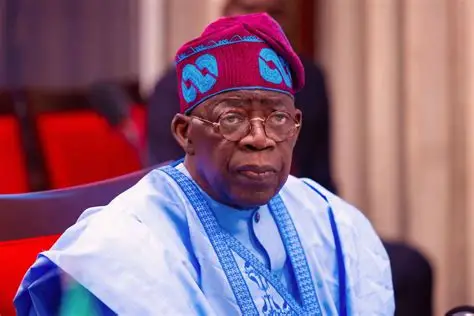
Several pictures with different meanings struck and stuck to different people on the occasion of the state visit the British monarchy held for the Nigeria President Bola Ahmed Tinubu inside March; coincidentally, the month of Ramadan for 2026.
No Nigerian took note of Tinubu’s religion until he entered the presidential race in 2023. His claims to being a Muslim was met with “so what?”
He didn’t look like one. Was never found among any Islamic group. Like Samuel Sam-Sumana before him – in Sierra Leone’s 2007 presidential elections. The only validating authorities, in this case, were Islamic leaders and it wasn’t politically, and perhaps, financially, prudent to deny such claims.
But, in the case of Tinubu, it didn’t wash with the northern Muslims whose Islamic devotion is openly zealotry. If they were going to vote for Tinubu, he will have to run with a northern Muslim. So, the campaign paired him with Kashim Shettima – a former governor of the northern state of Borno.
Tinubu’s failed attempts to recite the Suratul Fatiha in public were derisively dismissed as a bad joke. Nevertheless, he proceeded to Mecca to perform the holy pilgrimage; thus, becoming an Alhaji.
The elections came and he was declared winner. The rest might be history.
Whatever the real reasons, Nigerians were stunned when the news broke out that the British monarch, Nigeria’s formal colonial masters, after 37 years, invited a Nigeria’s leader to a state visit.
Worrying pictures that emerged from that visit were, among others, of 77-year-old King Charles holding and guiding the shaky steps of a so-called 73-year-old Tinubu, like a two-year old toddler, around the royal grounds.
Then, of course, the picture of Alhaji Tinubu glamorously holding a glass of wine in a toast to the King while Muslims all over the world observed the Ramadan fasting was a zeal breaker for many; especially in the north of Nigeria where most of the population has come to despise him.
It puzzles; like everything Tinubu.
Salone, Guinea, Trump and the Ayatollah
The Guinean military were at their muscle flexing and browbeating games yet again in February when they pounced on their Sierra Leonean counterparts at the (Falaba area) Sierra Leone border post.
Social media and newspapers had a field day running pictures of the Sierra Leonean soldiers raided and roughened while some of them reportedly took to their heels to test their sprinting acumen – Usain Bolt style. Others yet, were taken hostage.
Needless to say, Freetown was filled with outrage. Consternation for the unbridled audacity of the Guinean soldiers boiled furiously like volcanic vomit – with the same measure parceled for the presumed weakness of the Sierra Leonean side which allegedly gave in meekly.
“How dared the Guineans?” was the overflow of outrage commonly deployed by compatriots; far brave at chattery than combat. They should have “slugged it out; man to man,” they beat their chest to one another.
Only a few, negligible few, cautioned that the Guinean militarily outclasses the Sierra Leonean soldiers. Others yet, maintain the clashes, frequent as they occur, were unnecessary because, according to them, both Sierra Leone and Guinea are brothers.
These conversations were all over Freetown. This is one of the beauties of the city’s streets and street corners.
It happened that the banter on the Guinea – Sierra Leone military clash merely proved as rehearsal for the all-consuming US-Israel war against Iran which began with the bomb raids on February 28.
“What gave Trump the audacity to enter into another country and kill their leader? Who does he think he is?” was the sequel of furious rendition everywhere. Some clench teeth and muscles as if they could strike an imaginary Trump from an arm’s swing away. “How can America have a stockpile of nuclear weapons and deny another country the right of same?” they wailed?
And you still find cautious ones amongst the groups who watch over their shoulders and warn the group members to be careful with what they say since, they believe, “Trump and America are so powerful that they can decide life and death anywhere on the surface of the earth”.
This cautionary advice usually ends up adding to the decibels. “Can Trump try North Korea?” “Let him go near Putin and see!” “Hey! Trump fears Putin.”
Most times, the conversations are in choruses; and even inconclusive.
Save for ace journalist Umaru Fofana who maintains predictable social media presence to give expression to his addiction to football – the English premier league side Manchester United, in particular – these waves of crises have, it seems, quietened Freetown from the customary Liverpool – ManU – Arsenal discordant debates and rivalries.
Surely, Freetown can never be boring.
A Satirist Vigil on Border Crisis
By Sule Musa
Somewhere between Sierra Leone and Guinea lies a border so shy, so elusive, that even the men tasked with guarding it occasionally disagree on where it actually is. It is a line drawn long ago by people who had never visited, using rulers that never bent and maps that never wrinkled in the rain. On paper, it is perfectly straight. On the ground, however, it wanders like a goat that has lost interest in being owned.
This would not normally be a problem, except that, modern nations, unlike goats, take their boundaries very seriously—especially when uniforms, pride, and a limited supply of patience are involved.
The latest border clash began, as these things often do, with absolute certainty. A group of soldiers from one side stood firmly on what they knew—without a shadow of doubt—to be their country. Across from them stood another group of soldiers, equally firm, equally certain, and equally convinced that the first group had wandered into their country.
There are few forces in the universe more powerful than two groups of people who are completely sure they are right.
At first, the situation was handled with the usual diplomatic tools; staring, gesturing, and that very specific kind of silence that carries more meaning than a thousand words. One soldier pointed at the ground. Another shook his head. Someone unfolded a map that had clearly lived a long and difficult life. It was consulted, rotated, and briefly held upside down—just in case perspective was the problem.
But the map, like all good bureaucratic artifacts, provided no clarity whatsoever.
Soon, voices were raised. Not in anger at first, but in the tone of men who cannot believe they are being forced to explain something so obvious. “This is our land,” said one side. “No, this is our land,” replied the other. Each statement was delivered with increasing volume, as though truth itself might be persuaded by decibels.
In the nearby village, civilians watched with the weary familiarity of people who have seen this performance before. They knew the land better than anyone. They knew where the streams flooded in the rainy season, where the soil was good for planting, and where the border posts had been moved, adjusted, or “temporarily relocated” over the years. They also knew one crucial fact; the land did not care.
The land did not know it was disputed. The trees continued growing without checking passports. Chickens crossed the border with reckless abandon, committing daily acts of international trespass. Even the wind, that most neutral of entities, refused to respect sovereignty, blowing freely from one country to the other without so much as a visa.
Meanwhile, the soldiers, representatives of modern nationhood, could not allow such chaos to continue.
Reinforcements were called—not because anyone wanted a fight, but because no one wanted to appear unprepared for one. Trucks arrived, engines growling with official seriousness. More uniforms, more boots, more certainty. If the border had been unclear before, it was now positively bewildered.
At some point, someone fired a shot.
To this day, no one is entirely sure who fired first, or why. It may have been a warning shot. It may have been an accident. It may have been an attempt to persuade the border to reveal itself through sheer intimidation. Whatever the reason, it had the predictable effect of transforming confusion into confrontation.
Shots were returned, not necessarily out of hostility, but out of obligation. After all, when a shot is fired in your direction, it feels impolite not to respond. Soon, the air was filled with the sound of gunfire—loud, dramatic, and entirely unhelpful in determining where the invisible line actually lay.
From a distance, it must have looked like a serious conflict. From up close, it was something else entirely; a dispute between two groups of men, each defending a concept that refused to sit still.
Back in the capitals, officials scrambled to respond. Statements were issued, carefully worded to express both strength and restraint. Each government affirmed its commitment to peace, while also affirming, in no uncertain terms, that the other side had made a grave mistake.
Diplomats were dispatched. Meetings were scheduled. Committees were formed. Somewhere, a new map was printed, crisp and authoritative, its lines drawn with the confidence of someone who would never have to stand in the mud and argue about them.
And on the border, the soldiers waited.
They waited for orders, for clarity, for someone, somewhere, to definitively answer the question: “Where exactly are we standing?” It was a question that seemed simple, yet carried the weight of history, politics, and human stubbornness.
Eventually, as all such situations do, the clash subsided. Not because the issue was resolved, but because it had exhausted itself. Ammunition was conserved, tempers cooled, and the realization dawned that the border had not, in fact, revealed its secrets under pressure.
The soldiers withdrew slightly—just enough to avoid further incident, but not enough to concede anything. The invisible line remained invisible. The maps remained questionable. The certainty remained intact.
Life resumed its rhythm.
Villagers returned to their fields, carefully navigating a landscape that had briefly become far more dangerous than it had any right to be. Traders resumed crossing the border—sometimes officially, sometimes not—carrying goods, gossip, and the quiet understanding that survival often depends on ignoring lines that others insist on enforcing.
And the border? The border continued doing what it has always done; existing in theory, misbehaving in practice, and occasionally provoking moments of profound absurdity.
It is easy to laugh at such incidents, to see them as farcical misunderstandings. But beneath the satire lies a deeper truth; borders are ideas, powerful and necessary, yet ultimately fragile when confronted with the complexity of real life.
A line on a map can divide nations, but it cannot easily divide rivers, forests, or communities. It cannot account for history lived on the ground, for relationships that stretch across boundaries, or for the simple fact that the world is rarely as neat as we would like it to be.
And so, from time to time, the illusion cracks.
Two groups of soldiers meet in a place that is both here and there, each convinced of their position, each defending something intangible yet deeply important. Voices rise, shots are fired, and for a brief moment, the abstract becomes dangerously real.
Then, just as quickly, it fades.
The border slips back into ambiguity. The land continues its quiet indifference. And the people who live there carry on, navigating a reality far more nuanced than any map could ever capture.
Until, of course, the next time the border decides to move itself.