AWARD CAPS FINANCE MINISTER’S ACHIEVEMENTS AS HE DELIVERS ON PRESIDENT BIO’S ECONOMIC DEVELOPMENT AGENDA
- Development Politics & Governance
admin
- 0
- 20 minutes read

- Macro Fiscal Policy Making
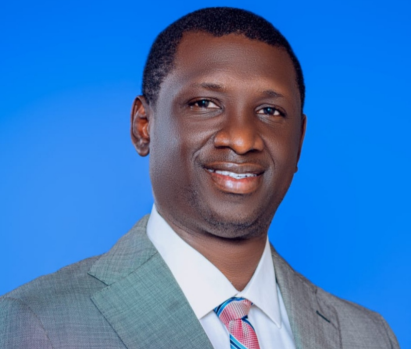
Sierra Leone Finance Minister Sheku Ahmed Fantamadi Bangura could, justifiably, still be celebrating his award as African Government Minister of the Year 2025 at the 15th edition of the African Leadership Magazine Persons of the Year Awards announced recently in early March 2026.
Award organisers citing the Minister’s bold economic reforms agenda and leadership in strengthening fiscal discipline, promoting debt sustainability, curbing inflationary pressures, reinforcing public financial management systems and advancing sustainable development priorities noted that these were among the several considerations that decided the award in favour of Minister Bangura.
This recognition, yet again, calls to attention the several accomplishments of the Minister at the head of the Ministry of Finance which is the central government institution mandated to manage public finances, formulate fiscal policies, and ensure efficient allocation of public resources to support national development strategies.
In the corridors of Sierra Leone’s Ministry of Finance, a quiet revolution is underway. Under the stewardship of Finance Minister Bangura, President Julius Maada Bio’s ambitious “Big Five” game-changer agenda is being translated from policy documents into tangible economic reality, with recent international endorsements and innovative financing mechanisms signaling a new chapter for the West African nation’s development trajectory.
The recent past has witnessed a remarkable acceleration in Sierra Leone’s economic reform programme, with Minister Bangura at the helm navigating complex global headwinds while securing landmark international support. In December 2025, the International Monetary Fund (IMF) Executive Board completed the first and second reviews of Sierra Leone’s Extended Credit Facility (ECF) arrangement, approving an immediate disbursement of approximately $79.8 million.
This endorsement represents more than just a financial injection—it is a powerful vote of confidence in the economic management team’s stewardship. The IMF’s decision highlighted Sierra Leone’s “strong macroeconomic stability, prudent fiscal policy, and accelerated reforms,” a testament to what analysts describe as a methodical approach to economic governance under Minister Bangura’s leadership.
Speaking after hosting the IMF team, Minister Bangura emphasized the broader significance of the achievement. “The completion of the IMF reviews not only marks a procedural milestone but also reflects international confidence in Sierra Leone’s economic strategies,” he stated, noting that inflation had declined while the national currency, Leone, remained stable.
These achievements are the outcome of fiscal discipline implemented in recent years to stabilise the economy. At the FY2026 Budget National Policy Hearing in September 2025, Minister Bangura announced that Sierra Leone had achieved 6.45 percent single-digit inflation in July 2025—a result of exchange rate stability, moderate global food and energy prices, improved domestic food production, and tightened monetary policy backed by fiscal consolidation measures. Public finances are also being managed well under his leadership evidenced by the reduction in the overall budget deficit from 6.0 % of GDP in 2022 to 4.6% of GDP in 2025. Fiscal consolidation has resulted in a significant improvement in the domestic primary balance, from a deficit of 5.6% of GDP in 2022 to a surplus of 1.0 % of GDP in 2025, meaning that public finances are moving towards a sustainable path.
Minister Bangura has also implemented several public financial management reforms in recent years to improve budget planning and execution. These include the introduction of baseline budgeting to enable MDAs to prepare realistic budget estimates and gender -responsive budgeting, which ensures that gender equity in the allocation of budgetary resources. Cash management is also being strengthened to minimise expenditure overruns and the accumulation of payment arrears. The Integrated Financial Management system has been rolled out to over one hundred Ministries, Departments and Agencies including subvented agencies to enhance the comprehensive
- External Resource Mobilisation to support President Bio’s Big Five Game Change Changers
- The FEED SALONE Programme
Food security—a cornerstone of the “Big Five” agenda—received a major boost in November 2025 when Parliament ratified financing agreements for the Livestock and Livelihoods Development Project, aimed at supporting 62,000 households under the flagship Feed Salone Initiative
During the parliamentary session, Minister Bangura emphasized the transformative potential of these agricultural investments. “By improving access to markets and supporting livestock development, we are laying the groundwork for sustainable economic growth,” he stated, while also committing the government to monitor access to finance for farmers—a critical barrier that has historically constrained agricultural productivity.
The livestock project, financed in partnership with international development partners, represents a strategic intervention to reduce Sierra Leone’s reliance on food imports while creating livelihoods in rural communities. Lawmakers from both sides of the aisle welcomed the initiative, with Hon. Keikura Vandi from Bo District expressing optimism that the agreements would alleviate the challenges farmers face in securing financing.
Prior to this, Minister Bangura had secured financing from the World Bank under the Food Systems Resilience Project to support the development of agricultural value-chains and strengthening food systems.
- Boosting Energy Generation
Central to President Bio’s “Big Five” agenda is the transformation of Sierra Leone’s energy sector, and Minister Bangura has been unflinching in his pursuit of international partnerships to realize this vision. In October 2025, he outlined the government’s financial commitments toward strengthening energy infrastructure through the Millennium Challenge Corporation (MCC) Compact and the Mission 300 initiative.
The MCC Compact, Minister Bangura explained during a press conference at the Miatta Conference Centre, is focused on developing foundational energy infrastructure through the construction of transmission lines, distribution systems, and dispatch centres. “MCC is investing in building an ultramodern foundational transmission and distribution infrastructure,” he said, revealing an ambitious engineering design that “will create a loop around Sierra Leone, allowing every district to benefit from this infrastructure”.
This national grid integration represents a paradigm shift from fragmented energy access to a cohesive national system. Complementing this effort, the Mission 300 initiative aims to expand renewable and sustainable energy generation through investments in hydro, solar, gas, and other power sources.
Perhaps most significantly, Minister Bangura has positioned Sierra Leone to benefit from regional energy trading through the ECOWAS Regional Power Trade System and the West African Power Pool. “Mission 300 is about making Sierra Leone a hub for scalable power generation that can be traded after meeting home-base demand,” he explained.
Crucially, the Minister emphasized that government reforms have “de-risked the energy sector and opened it up for private participation by breaking monopoly,” creating an enabling environment where each component of the Mission 300 project is fully costed and supported by clear business plans that enable investors to recover their investments.
© Connecting Communities Through Infrastructural Development
The “Big Five” agenda’s infrastructure pillar advanced significantly with Parliament’s ratification of financing agreements for the reconstruction of the Kambia-Tomparie-Kamakwie road in November 2025. Several loan and agency agreements with the Islamic Development Bank (IDB) will support this critical transport artery in the North-Western Region, expected to significantly improve market access and economic integration.
During the ratification debate, Minister Bangura emphasized the project’s importance for sustainable economic growth, while lawmakers from both ruling and opposition parties welcomed the initiative. Hon. Abdul Karim Bangura acknowledged the road project as fulfillment of President Bio’s promise to the people of Karene District, while Hon. Musa Fonah from Kono District described it as “a significant boon for the nation”.
Deputy Leader of Government Business, Hon. Bashiru Silikie, stressed the importance of tollgate provisions on the Kamakwie Road for long-term sustainability, demonstrating the government’s commitment to infrastructure financing models that ensure maintenance and durability.
Minister Bangura also secured additional financing from the World Bank for the construction of additional rural bridges under the Connectivity Agricultural Marketing and Infrastructure Project (CAMIP) following the closure of the Small Holder Commercialisation Programme, which supported the construction of the first set of rural bridges Manowa, Jojoema, Tompari rural bridges. This will improve rural connectivity, boost trade and enhance the delivery of social services in rural communities.
- Domestic Resources Mobilisation
Cognisant of the shift in geopolitical priorities and the consequent shrinking of Official Development Assistance (ODA), Minister Bangura has been pursuing reforms to improve domestic revenue collection. He formulated the Medium-term Revenue Strategy (MTRS, 2023-2027) to boost domestic revenue collection. The implementation of this strategy, which contained both tax policy and administrative measures has led to an improvement in domestic revenue collection from 7.2% of GDP in 2022 to 10.8% of GDP in 2025. In his 2026 Budget and Statement of Economic Policies, Minister Bangura emphasized that in the context of the current international financial landscape, we should look inwards to raise resources to finance our national development plan.
The F Y2026 Finance Bill
As the government prepared for the 2026 fiscal year, Minister Bangura proposed revenue measures expected to generate an additional NLe 2.85 billion, equivalent to 1.5 percent of GDP, through the Finance Bill 2026, which will increase domestic revenue to 11.8% of GDP in 2026.
Presenting the bill for ratification, Minister Bangura emphasized that the proposals were intended to strengthen tax efficiency and compliance, which he described as “critical for easing fiscal pressures and ensuring sustainable development,” stressing that “no nation can achieve long-term growth without strong domestic resource mobilization to support effective public-service delivery”.
The bill introduced several tax policy measures to raise revenue while promoting the local production of basic food items and addressing environmental challenges.
In this regard, the bill proposed higher import duties for basic imported food items that are produced locally such as eggs, maggi, bottled water, tomato paste and tomato ketchup to protect local industries and boost the resilience of the economy. The Bill at the same time introduced zero import duties on LPG gas, accessories, cooking stoves, solar panels, and other home-system components—measures designed to encourage clean energy adoption while providing relief to households. It also restored excise duty on cement at NLe 10 per 50kg bag, a measure previously suspended to mitigate global economic shocks.
These revenue measures were part of a broader strategy outlined at the FY2026 Budget National Policy Hearing, where Minister Bangura emphasized innovative approaches including climate finance, carbon trading, debt swapping, and state commercial participation in mining.
“The international financing landscape is changing drastically,” Minister Bangura acknowledged, pointing to declining development assistance and the need for self-reliance. This realism has informed a budget strategy focused on enhancing traditional sources through effective and efficient tax management using technology, while exploring new frontiers in climate and natural resource finance.
- International Thumbs-Up
The IMF’s approval of the $79.8 million disbursement represents the culmination of months of intense policy coordination between the Ministry of Finance, the Bank of Sierra Leone, and National Revenue Authority (NRA). The ECF programme has served as an anchor for Sierra Leone’s economic reform agenda, with the government intensifying efforts to broaden the tax base, modernize revenue collection systems, strengthen foreign exchange management, and reduce debt vulnerabilities.
Minister Bangura has consistently emphasized that the implementation of the IMF programme is “fully on course,” with corrective actions agreed with the Fund geared toward meeting all structural benchmarks. This discipline has paid dividends; the IMF’s staff-level agreement acknowledges the progress made despite global economic shocks, domestic constraints, and lingering effects of inflation and currency depreciation.
Looking ahead, the newly available resources will support programs designed to “uplift households, create opportunities for youth, and protect the most vulnerable communities while ensuring continued fiscal and monetary stability,” Minister Bangura affirmed.
The cumulative impact of Minister Bangura’s stewardship is becoming increasingly evident as President Bio’s vision, the “Big Five” agenda—feeding the nation, human capital development, youth employment, infrastructure revolution, and governance reform—is being operationalized through concrete policies, innovative financing mechanisms, and disciplined fiscal management.
From macroeconomic stability, to energy sector transformations that will connect every district to the national grid, to agricultural initiatives supporting 62,000 households, , to infrastructure projects connecting communities—the architecture of economic transformation is taking shape.
Minister Bangura’s approach combines realism about global economic challenges with optimism about Sierra Leone’s potential. “The Ministry has implemented measures to tighten fiscal policy and strengthen revenue mobilization, while the Bank of Sierra Leone has ensured monetary stability, aiding in the restoration of economic confidence,” he reflected earlier following the IMF announcement.
For Sierra Leoneans across the country, these macroeconomic achievements are beginning to translate into tangible improvements. As the government continues its reform agenda with international partners’ confidence, Minister Sheku Ahmed Fantamadi Bangura stands as a central figure in the nation’s journey toward sustainable, inclusive economic development—translating the “Big Five” vision from presidential ambition into lived reality for Sierra Leone’s citizens.
There was no better stage than the Fourah Bay College (University of Sierra Leone) Multi-Purpose Hall on January 15, 2026 when Minister Bangura delivered a public lecture, taking the national budget conversation to, especially the young minds, who will shape the nation’s future in a message that was both instructive and inspiring while positioning the budget as a document that touches every household, business and institution.
A Table of Sidelights on the Feed Salone Milestones
- Feed Salone is already translating policy into food on the table – food inflation has fallen sharply while the purchasing power of ordinary citizens has increased.
- Domestic rice production has grown steadily, bringing Sierra Leone to 73% rice self-sufficiency and moving the country closer to ending its dependence on imports.
- Severe food insecurity in Sierra Leone has dropped dramatically from 28% to 13% between 2023 and 2025, showing that strategic agricultural investment can directly improve household welfare.
- Sierra Leone is building its first national digital farmer registry, targeting the registration of 300, 000 farmers.
- Forty new tractors are being deployed to accelerate mechanized cultivation in key rice production hubs.
- More than 420 kilometres of feeder roads will be completed across 8 districts to connect farmers to markets.
- Nearly 200 animal health workers will be deployed to strengthen veterinary services across the country.
- Over 70, 000 livestock animals will be distributed to households under the Livestock and Livelihoods Development Project.
- More than 6,000 farmers will benefit from training and extension support as agricultural systems expand nationwide.
- Local rice now accounts for 40% of the rice used in Sierra Leone’s school feeding programme, up from just 10% a year earlier.
- About 40% of major investment pledges made in 2024 have already materialised into funded agricultural projects.
- Agricultural projects worth approximately $320 million have already been mobilized to support the Feed Salone agenda.
- The total area cultivated has expanded to more than 661, 000 hectares nationwide.
- Agricultural yields have improved by 9%, reflecting the impact of improved seeds and modern farming technologies.
- National rice self-sufficiency has increased from 68% to 73%, bringing the country closer to food independence.
- Sierra Leone’s rice production reached more than 1.44 million metric tonnes in 2025.
- Imported rice prices have fallen from 24 Leones per kilogram to 19 Leones per kilogram.
- The purchasing power of Sierra Leone’s minimum wage has improved significantly, rising from the ability to buy 34 kg of rice per month to 43kg.
- Food inflation in Sierra Leone has fallen dramatically by nearly 87%, helping to stabilise the cost of food for ordinary citizens.