RESHAPING ACCOUNTABILITY: SIERRA LEONE’S RISE AS A MODEL FOR ANTI-CORRUPTION REFORM
- Banking & Finance Business Economy Uncategorized
admin
- 0
- 10 minutes read

For decades, corruption in Sierra Leone was not merely a governance defect, it was a national resignation. Citizens complained, reports were written, commissions were formed, but consequences were slow, supposedly selective, or notably invisible. Cases dragged on for years, assets vanished permanently and public trust thinned.
In 2018, Sierra Leone stood at 130th on Transparency International’s Corruption Perceptions Index (CPI). That ranking was not just a statistic; it was a global verdict on institutional weakness. Skepticism was understandable. Many believed corruption was too entrenched to meaningfully reverse. But transformation rarely begins with optimism. It begins with resolve.
When Commissioner Francis Ben Kaifala assumed leadership of the Anti-Corruption Commission (ACC) in 2018, he articulated a clear strategic objective to make “corruption a high-risk and low-return venture”. That statement was not rhetorical flourish. It became operational doctrine. The shift was immediate and structural.
“We will make Corruption a high risk and low return venture” ~ Francis Ben Kaifala Esq., Commissioner ACC
The ACC moved beyond reactive investigations to proactive systems reform. Comprehensive systems reviews were conducted across ministries, departments, agencies, and revenue-generating institutions. These were deep institutional diagnostics, identifying procurement loopholes, financial control weaknesses, policy inconsistencies, administrative blind spots among others. The difference this time was implementation. Recommendations were enforced. Administrative procedures were tightened. Internal control systems were strengthened. Prevention became institutionally entrenched and not necessarily episodic.
But the real turning point came in the justice system. For years, one of the greatest weaknesses in anti-corruption enforcement was time. Cases took 3 to 6 years to conclude. Justice delayed weakened deterrence. Public confidence eroded as matters lingered indefinitely.
The establishment of the Anti-Corruption Division of the High Court in 2019, exclusively dedicated to trying ACC cases, fundamentally changed the enforcement architecture. By creating a specialized judicial track for corruption matters, Sierra Leone removed one of the most significant structural bottlenecks and barricade. The impact has been dramatic. Where corruption cases once averaged 3 to 6 years, the timeline has now been reduced to approximately 3 to 6 months. This is not merely administrative efficiency. It is deterrence in action. Swift justice alters behavior. It signals seriousness. It transforms perception into consequence. Conviction rates soared to an exceeding 90 percent which is notan accidental statistics. They are the product of coordinated investigation, prosecution, and judicial specialization.
Parallel to judicial reform was legal innovation. The 2019 amendment to the Anti-Corruption Act strengthened enforcement tools, particularly through Section 89, which expanded non-conviction-based asset recovery mechanisms. This reform allowed the state to recover unexplained wealth without waiting for prolonged criminal proceedings, a critical adaptation in complex financial cases. The results have been measurable. Since the reform cycle began, the ACC has recovered over Seventy Million Leones from corrupt practices, funds returned directly to the state. These recoveries are not theoretical savings; they are tangible restitution.

Sea of money totalling 34.8 Million Leones recovered through the Nonconviction recovery model from one case.
Asset recovery has also been visible in physical form. In June 2023, three residential properties were confiscated under unexplained wealth provisions, a significant milestone in Sierra Leone’s enforcement history. In August 2023, a hotel in Kono that had been improperly acquired was restored to state ownership and repurposed for use by Kono University, transforming illicit enrichment into educational infrastructure. Between September 2025 and January 2026, four additional properties were seized and placed up for sale to restitute the state.
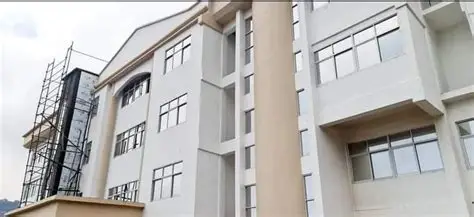
One of the luxurious mansions that the ACC through the High Court recovered on counts of unexplained wealth.
These actions changed the psychological equation of corruption where illicit enrichment once appeared safe, it now appears vulnerable. But enforcement cannot rely solely on institutional action. It requires citizen courage.
Recognizing this, Sierra Leone strengthened its anti-corruption ecosystem through new Whistleblower and Witness Protection Regulations. These regulations provide structured safeguards for individuals who report corruption, reinforcing confidentiality protections and procedural security. An anti-corruption system without whistleblower protection breeds silence whilst a protected reporting system breeds accountability.
Public engagement has also been strategic and sustained. Beginning with nationwide town hall meetings in 2018 led by the Commissioner himself, the ACC deliberately took the anti-corruption conversation beyond courtrooms and into communities. Traditional leaders, paramount chiefs, civil society actors, youth networks, students, and public servants were engaged not just as spectators, but as partners. That engagement continues with our revered Paramount Chiefs, reinforcing integrity as a shared civic responsibility.
All of this has been sustained by consistent presidential backing and institutional autonomy. Anti-corruption bodies cannot succeed in environments of political hesitation. In Sierra Leone, operational independence has been protected, enabling the ACC to act decisively.
The international indicators confirm the trajectory. In 2017, Sierra Leone failed the Millennium Challenge Corporation’s Control of Corruption indicator at 49 percent. In the years since, the country has consistently scored above 70 percent, maintaining strong performance across multiple cycles.
From 130th on the CPI in 2018 to 109th in 2025, Sierra Leone’s improvement is steady, measurable, and internationally recognized.
In 2024, the Mo Ibrahim Index of African Governance ranked Sierra Leone among the Top Ten Most Improved countries on the continent, citing governance and anti-corruption gains. These recognitions matter because they are independent assessments. They reflect institutional performance, not political messaging.
Increasingly, other countries and counterparts from Liberia, Guinea, Cameroun, Gambia to name but a few, are benchmarking Sierra Leone’s model, studying its specialized corruption court division, its non-conviction asset recovery framework, its systems review methodology, its handling of Grievance Redress Mechanism in Social Safety Nets, its public engagement strategy, and its whistleblower protections.
This does not mean corruption has disappeared as no nation of course eradicates corruption overnight. But what has changed is the operating environment. The ambition now is double digits on the CPI as validation of deep institutional maturity.
Sierra Leone’s anti-corruption story is no longer defined by aspiration. It is defined by measurable deterrence, structural reform, and sustained upward trajectory. And in a region searching for practical, replicable governance models, Sierra Leone is no longer merely participating in the conversation on integrity. It is helping to define and redefine it.