Middle East Crises: A war Gone Out of Hand

By Sule Musa
A widening war in the Middle East has rapidly evolved from a targeted military campaign into a volatile, multi-front confrontation with global implications. What began in late February 2026 as coordinated strikes by the United States and Israel against Iran has, within weeks, transformed into one of the most dangerous geopolitical crises of the 21st century—blending conventional warfare, proxy escalation, economic disruption, and high-stakes diplomacy.
The roots of the current war lie in the long-standing hostility between Iran and Israel, a rivalry that dates back to the 1979 Iranian Revolution but intensified sharply in recent years. By early 2026, tensions had reached a breaking point. Following failed nuclear negotiations and growing fears over Iran’s missile and nuclear capabilities, the United States and Israel launched a sweeping military campaign on February 28, 2026, targeting Iranian nuclear facilities, military infrastructure, and leadership.
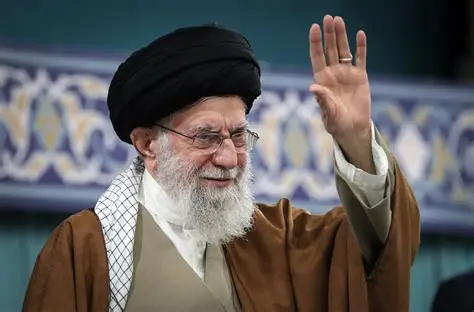
The opening strikes were unprecedented in scale and ambition. Iranian Supreme Leader Ali Khamenei was killed, alongside other senior officials, in what Washington framed as a decisive effort to cripple Iran’s military capacity and potentially trigger regime change.
Iran responded immediately—and forcefully. Within days, Tehran unleashed waves of ballistic missiles and drones against Israel, U.S. bases across the Gulf, and allied countries including Saudi Arabia, Qatar, and the United Arab Emirates. The conflict had crossed the threshold from shadow war to direct state-on-state confrontation.
More than a month into the war, the military balance remains complex and contested. The United States and Israel claim substantial success in degrading Iran’s military capabilities, striking thousands of targets and damaging critical infrastructure.
Yet, intelligence assessments suggest a more sobering reality, only about one-third of Iran’s missile arsenal has been definitively destroyed, with another portion hidden in fortified underground networks. This resilience underscores Iran’s long-standing strategy of dispersal and redundancy—designed precisely for such a confrontation.
Iran, for its part, continues to demonstrate offensive capacity. Missile strikes have penetrated Israeli defenses, causing civilian casualties and infrastructure damage, while long-range attacks have targeted U.S. positions and even distant strategic sites.
The result is a grinding, high-intensity exchange where neither side has achieved decisive dominance. As with many modern conflicts, civilians have borne a devastating share of the consequences. Human rights organizations report that nearly 1,500 Iranian civilians—including hundreds of children—have been killed since the campaign began.
Airstrikes have hit not only military targets but also schools, hospitals, and residential areas, raising serious questions about targeting accuracy and adherence to international humanitarian law. Inside Israel, Iranian missile attacks have also inflicted casualties and forced widespread disruptions to daily life, with air raid sirens, shelter use, and infrastructure damage becoming routine.
The humanitarian toll is compounded by limited access to information within Iran, where internet restrictions and wartime conditions hinder independent verification and relief efforts.
Perhaps the most alarming development is the conflict’s rapid regionalization. What began as a bilateral confrontation now risks becoming a full-scale Middle Eastern war. Iran’s network of allied groups—often referred to as the “Axis of Resistance”—has begun to mobilize.
In Yemen, the Houthi movement has launched its first direct missile attack on Israel, signaling entry into the conflict. Houthi leaders have warned they are prepared to escalate further, including targeting shipping routes in the Red Sea.
Hezbollah in Lebanon has intensified clashes with Israel, opening another active front. This multi-front dynamic dramatically increases the risk of miscalculation and escalation. Attacks on shipping lanes, particularly in the Red Sea and the Strait of Hormuz, threaten global trade and energy supplies.
At the heart of the crisis lies one of the world’s most critical chokepoints, the Strait of Hormuz. Through this narrow waterway flows a significant portion of global oil exports. Iran’s actions to disrupt or control the strait have already sent shockwaves through global markets. Shipping disruptions, rising insurance costs, and fears of a prolonged blockade have contributed to surging oil prices and supply chain instability.
The United States has responded by increasing its military presence in the region, raising the specter of battle for control of the strait—a scenario with potentially catastrophic economic consequences.
Even as fighting intensifies, diplomatic efforts continue—albeit haltingly and indirectly. The United States has proposed a ceasefire framework that would require Iran to dismantle its nuclear program, halt uranium enrichment, curb its missile development and cut support to regional proxy groups.
Iran has rejected these terms as overly restrictive, instead offering its own counterproposal that includes reparations and guarantees against future attacks.
Negotiations are being conducted through intermediaries such as Pakistan and Oman, reflecting the deep mistrust between the parties. While U.S officials express cautious optimism about a potential resolution “in weeks,” Iran denies that meaningful talks are underway.
The diplomatic track, in other words, remains fragile—and easily derailed by events on the battlefield. The war is not only reshaping the Middle East; it is reverberating globally. In the United States, the conflict has sparked political controversy, with critics questioning its objectives, costs, and humanitarian consequences.
Worldwide, protests have erupted both against and in support of the war, reflecting deep divisions over its legitimacy and implications. Meanwhile, global powers including China and European nations have called for de-escalation, wary of the broader economic and security fallout.
Despite the intensity of the fighting, several critical questions remain unresolved. Can Iran sustain prolonged resistance? Its dispersed military infrastructure suggests it can endure significant damage while continuing operations. Will the conflict widen further? The involvement of proxy groups raises the risk of a regional conflagration even more.
Is regime change a realistic objective? Early assumptions that leadership decapitation might destabilize Iran have not yet materialized. Can diplomacy catch up with the battlefield? With both sides entrenched, a negotiated settlement appears distant.
The U.S–Israel versus Iran war has, in less than a month, evolved into a complex and dangerous conflict with no clear resolution in sight. It combines elements of conventional warfare, proxy battles, economic warfare, and diplomatic brinkmanship.
What makes this conflict particularly perilous is not only its intensity but its unpredictability. Each missile strike, each new front, and each failed diplomatic overture increases the risk of escalation beyond control.
For now, the war remains a contest of endurance, strategy, and political will—one whose outcome will shape the future of the Middle East and reverberate across the global order.