How Xenophobia Is Hurting South Africa
- Politics & Governance Society
admin
- 0
- 16 minutes read
By JO Amara
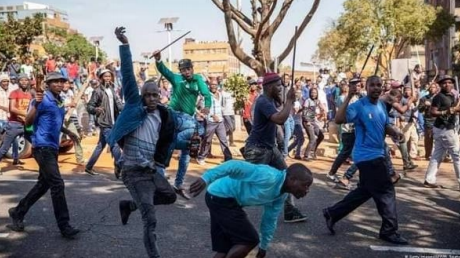
South Africa has long presented itself as a gateway to the African continent; a relatively sophisticated economy, a major financial centre and a destination for workers, traders, entrepreneurs and refugees from across the region. Yet that image has repeatedly collided with another reality—deep and sometimes violent hostility towards foreign nationals.
The consequences are not confined to the victims of attacks. Xenophobia has become an economic problem of its own, destroying businesses, disrupting labour markets, discouraging investment, damaging regional trade and placing additional costs on a government already struggling with unemployment, poverty and weak economic growth.
In 2026, the issue has again moved to the centre of national debate as well as continental concern. Anti-immigrant protests and attacks have prompted thousands of migrants to leave South Africa. Reuters reported in July that the exodus was threatening industries including construction, farming, retail and transport, sectors in which migrant workers play an important role.
The same report cited United Nations data estimating that about 2.6 million migrants used to live in South Africa, roughly 5% of the population, while an OECD-ILO estimate put migrants’ contribution to the economy at about 9% of GDP.
The numbers illustrate the contradiction at the heart of South Africa’s xenophobia debate – a population that is often portrayed as an economic burden is also deeply embedded in the production and consumption systems that keep the economy functioning.
Xenophobic violence in South Africa is marked by recurring episodes, beginning, significantly, in May and June 2008, when attacks spread through townships and informal settlements in Gauteng and other parts of the country. Foreign African nationals were assaulted, killed and driven from their homes and businesses.
More than 20,000 displaced foreigners were accommodated in temporary camps, while many others left the country only for the violence to return in 2015, particularly in KwaZulu-Natal and Gauteng. Foreign-owned shops were looted and destroyed, while migrant communities were displaced. In one wave of violence in Soweto, six people were killed and large numbers of Bangladeshi, Pakistani, Ethiopian and Somali residents were displaced.
These episodes demonstrated that xenophobia is not simply an issue of prejudice. It can become an economic shock at neighborhood level. According to a refuge caregiver in Kwazulu-Natal, “a shop that is burned is not merely a migrant’s personal property. It is also a customer outlet, a source of employment, a tenant in a commercial building and a purchaser from wholesalers. Its closure affects suppliers, landlords, transport operators and customers.”
Research into refugee-owned businesses in South African cities has documented the repeated destruction of shops through looting and arson, forced closures, displacement and loss of life. Experts note that the damage travels through the economy and nowhere is the economic contradiction more visible than in the country’s informal retail sector.
Foreign-owned spaza shops—small neighborhood stores commonly operated by migrants from countries such as Somalia, Ethiopia, Bangladesh and Pakistan—have become highly visible targets of xenophobic hostility. Critics often accuse foreign traders of taking business from South Africans, undercutting competitors or operating outside regulations.
But these shops are also part of a much larger commercial ecosystem. They purchase stock from wholesalers. They pay rent. They employ workers. They purchase transport and telecommunications services. They sell food and household necessities to residents who may not have convenient access to large supermarkets.
When violence forces these businesses to close, the economic loss does not stop with the owner. A wholesaler loses a customer. A landlord loses rental income. A local worker may lose a job. Consumers lose a nearby source of goods. Municipalities may lose revenue. And the community can lose an important distribution network.
A 2026 analysis of xenophobic violence against foreign-owned spaza shops described this process as an “economic rupture,” arguing that the destruction of migrant businesses has consequences far beyond the immediate victims.
This is one reason xenophobia can become self-defeating. Communities seeking to protect local economic opportunities can end up destroying businesses that generate employment, competition and consumer access.
At the centre of South Africa’s xenophobia debate is unemployment. The country has one of the world’s highest unemployment rates, and young people in particular face formidable barriers to entering the labour market. In such an environment, foreign workers can become convenient targets for frustration. Political movements and community groups frequently argue that migrants take jobs from South Africans, accept lower wages or compete for scarce opportunities.
While the argument sounds straightforward, the economic reality is more complicated. Migrants are not simply workers competing for jobs. They are also consumers, entrepreneurs, taxpayers and producers. They create demand for goods and services, establish businesses and fill positions in industries where employers may struggle to recruit sufficient workers.
Reuters reported in July that research does not support the broad claim that migrants simply eliminate employment opportunities for South Africans. Instead, migrants can contribute to economic activity and, in some circumstances, create or support employment for local workers.
If a migrant construction worker leaves because of threats, a construction company may not automatically replace that worker with an unemployed South African. It may instead face a labour shortage, delay a project or increase wages. If a delivery driver leaves, a company may have difficulty maintaining its service. If an entrepreneur closes a shop, the local economy loses the activity generated by that enterprise.
Xenophobia can therefore transform a debate about labour-market competition into a problem of labour-market disruption. For companies, instability is expensive. Businesses depend on predictable rules, safe workplaces and functioning transport networks. Xenophobic unrest undermines all three.
When violence erupts, shops close early. Employees stay home. Trucks may avoid affected areas. Customers reduce spending. Insurance claims increase. Companies incur security costs. Property can be damaged. Supply chains become unpredictable.
The uncertainty can be particularly damaging to small businesses, which often lack the financial reserves of large corporations. A multinational company may absorb the cost of temporary disruption. A small shop owner whose inventory is destroyed may have no comparable safety net.
There is also a reputational cost. South Africa competes with other countries for investment. Investors consider political stability, security and the predictability of the operating environment when deciding where to place capital. Repeated images of foreign-owned businesses being looted or migrants fleeing violence can contribute to the perception of a country in which social tensions spill over into commercial activity.
A 2026 study examining the economic and diplomatic consequences of xenophobic violence identified business disruption, employment, investment, tourism and regional relations among the areas affected by recurring episodes of violence. For instance, there reported instances of diplomatic cold shoulders between Ghana, Nigeria, Tanzania and South Africa immediately after the latest rounds of xenophobic attacks.
The effect on investment is difficult to isolate statistically from South Africa’s other economic challenges. But the principle is clear, instability adds risk, and higher perceived risk can make investment less attractive.
Xenophobia also creates direct costs for the state. When communities are displaced, government must provide emergency accommodation and humanitarian assistance. Police must be deployed. Courts and public agencies must process cases. Damaged infrastructure require repair.
The 2026 migration crisis illustrates the scale of such expenses. In August, South Africa said it had spent nearly $18 million accommodating and transporting immigrants who were repatriated or deported amid heightened anti-immigrant tensions. Government officials described the costs as unforeseen, while some municipalities and departments sought compensation because the expenses had not been budgeted for.
Every emergency rand spent responding to displacement, unrest or repatriation is a rand that cannot be spent elsewhere without additional revenue or borrowing. In a country facing pressure on public services, this matters.
The debate over undocumented immigration is legitimate. Governments have the right—and responsibility—to enforce immigration laws. But enforcement through orderly administrative systems is economically different from allowing anti-immigrant hostility to escalate into vigilantism and violence. The latter produces costs that immigration enforcement alone does not.
South Africa’s economy cannot be separated from the economies of its neighbours. Millions of people across Southern Africa depend on cross-border movement for employment, commerce and family support. South African companies sell goods and services throughout the region, while neighbouring countries supply labour, consumers and markets.
Xenophobic violence threatens these relationships. When foreign nationals are attacked, neighbouring governments face pressure to protect their citizens. Diplomatic tensions can follow. Consumers in other countries may respond by avoiding South African products or businesses. Examples abound in Nigeria where calls were made for South African digital satellite television, DSTV to close operation in the country.
Invariably, the impact can also move in the opposite direction through remittances. Migrant workers in South Africa frequently send money home. When they leave, their families and communities lose an important source of income. Reuters noted that declining remittance flows could affect neighbouring countries that rely on financial support from migrants working in South Africa.
The result is a regional economic chain. A worker loses a job or business in Johannesburg; a family in Harare, Maputo or Lilongwe loses income; local consumption declines there; and diplomatic relations with South Africa become more strained.
South Africa’s position as the continent’s industrial and financial heavyweight makes this especially significant. Tourism and the country’s image unwittingly take a hit. South Africa has invested heavily in presenting itself as a destination for international visitors. The country’s attractions include its wildlife, beaches, cities, wine regions and cultural heritage.
However, international visitors do not distinguish neatly between political violence and everyday insecurity. Images of riots, attacks and burning businesses can influence perceptions of safety. Even when violence is concentrated in particular neighbourhoods, the international narrative can be broader – South Africa becomes associated with instability.
The same reputational problem can affect students, skilled workers, entrepreneurs and international organisations considering the country. A country cannot easily market itself as a welcoming gateway to Africa while simultaneously allowing hostility towards other Africans to become normalised.
The human cost becomes an economic cost. It is important not to reduce xenophobia to economics. People have been killed. Families have been separated. Businesses have been destroyed. Children have been displaced. Migrants who have lived in South Africa for years have sometimes found themselves suddenly afraid to leave their homes.
In June 2026, The Guardian (newspaper) of London reported that at least four people had died amid a new wave of anti-immigrant unrest and that more than 25,000 immigrants had been repatriated as tensions escalated.
The human consequences are profound. But they also have economic implications. A worker who is traumatised may be unable to work. A business owner whose premises are destroyed loses years of accumulated capital. A family forced to relocate loses housing stability. Children removed from school face interruptions that can affect their future earning potential.
In this sense, xenophobia destroys not only existing economic capital but also human capital.
South Africa’s economic problems are real. Unemployment is severe. Inequality remains deeply entrenched. Many communities struggle with poor housing, unreliable services and limited economic opportunities. Public frustration over immigration is therefore occurring in an environment of genuine hardship even though misdirected.
The country has already witnessed major outbreaks in 2008 and 2015, followed by further episodes of anti-foreigner violence. Yet the underlying pressures—unemployment, inequality, weak service delivery and migration-management problems—remain.
Violence has therefore failed to solve the problems that helped create it, while, indeed, it can make them worse. The strongest response to xenophobia is not simply moral – it is economic.
Additionally, South Africa needs a migration system that distinguishes between documented and undocumented migrants, manages borders effectively, processes asylum claims efficiently and enforces labour regulations fairly.
It also needs policies that help South Africans compete for jobs through better education, vocational training and access to finance.
Foreign-owned businesses should not receive special treatment, but neither should they be targeted because of their owners’ nationality. The same standards of taxation, licensing, employment law and consumer protection should apply to everyone.
At the same time, government and business associations can help integrate migrant entrepreneurs into formal commercial networks, where regulation and accountability are clearer. The goal should not be an economy without migrants. South Africa’s economy has never operated in such isolation.
The goal should be an economy in which migration is managed effectively, competition is fair and violence is not allowed to substitute for public policy.
South Africa faces a difficult economic future. Growth remains weak, unemployment is high and millions of citizens are searching for opportunities which they now know cannot be found just by the departure of migrants. It now stares everyone in the face that removing migrants does not automatically create productive industries, repair electricity infrastructure, improve schools, raise investment or solve unemployment.