How Defections to the Ruling Party Are Testing Nigeria’s Democratic Foundations
- Governance Politics Politics & Governance
admin
- 0
- 12 minutes read

By Dr. James Odaudu in Abuja
In recent years, Nigeria has witnessed a steady stream of opposition politicians defecting to the ruling All Progressives Congress (APC). What once appeared to be routine political maneuvering has evolved into a defining feature of the country’s political landscape—raising urgent questions about the health of its democracy.
From governors and senators to members of the House of Representatives and local power brokers, defections have become both frequent and strategic. While party switching is not new in Nigeria, the scale and timing of recent movements—often tilting the balance of power decisively toward the ruling party—have sparked concerns among analysts, civil society groups, and citizens alike.
At the heart of the debate lies a fundamental question; when opposition figures abandon their parties en masse for the ruling establishment, does democracy grow stronger through political realignment—or weaker through the erosion of meaningful competition?
Nigeria’s political system has long been characterized by fluid party loyalties. Since the country’s return to civilian rule in 1999, politicians have often switched allegiances in pursuit of power, protection, or political survival.
However, the current wave of defections to the APC stands out for its consistency and asymmetry. While politicians occasionally leave the ruling party, the overwhelming trend has been movement toward it. Many of these defectors come from major opposition platforms such as the People’s Democratic Party (PDP) and the Labour Party, both of which have struggled to retain high-profile members in the face of internal divisions and external pressures.
The result is a political environment in which the ruling party steadily consolidates influence—not only through elections, but through absorption.
Defections in Nigeria are rarely spontaneous. They are typically driven by a mix of political calculation, institutional weakness, and systemic incentives.
In a system where federal authority exerts significant influence over state and local governance, aligning with the ruling party often provides access to resources, appointments, and political leverage. For many politicians, remaining in opposition can mean marginalization.
Some defectors cite political persecution or legal challenges as motivating factors. Aligning with the ruling party can, in certain cases, offer a degree of protection or relief.
Unlike in more ideologically driven democracies, Nigerian political parties often lack clearly defined policy differences. This makes it easier for politicians to justify switching allegiances without facing strong ideological backlash.
Opposition parties frequently experience leadership disputes and factional conflicts. These internal struggles create openings for the ruling party to attract dissatisfied members. While defections are not inherently undemocratic—indeed, freedom of association is a core democratic principle—the scale and pattern of current movements raise deeper concerns.
A functioning democracy depends on a credible opposition capable of holding the government accountable. As opposition ranks thin, so too does their ability to challenge policies, scrutinize decisions, and present alternative visions. When lawmakers defect, they often shift the balance in legislative bodies, weakening oversight. Parliamentary debates become less adversarial, and critical voices are diluted.
Nigeria is not formally a one-party state. However, the accumulation of defections risks creating a de facto dominant-party system, where one party exercises overwhelming control over political institutions. Such dominance can reduce electoral competitiveness, discourage voter participation, and limit the diversity of political representation.
One of the most contentious aspects of defections is their impact on voters. Citizens elect candidates based on party platforms and affiliations. When those candidates switch parties mid-term, voters may feel betrayed. This phenomenon raises questions about the legitimacy of mandates. Should a politician retain their seat after defecting? Or should such moves trigger by-elections?
Nigeria’s legal framework provides some guidance, but enforcement has been inconsistent, leaving room for controversy. Nigeria’s Constitution addresses defections, particularly for legislators. It stipulates that elected officials may lose their seats if they defect without a justifiable reason, such as internal party division.

However, this provision has proven difficult to enforce. Politicians often cite factional disputes within their original parties as justification for defection. Courts, in turn, have issued varying interpretations, creating a patchwork of precedents. The result is a legal gray area that allows defections to continue with minimal consequences—effectively normalizing the practice.
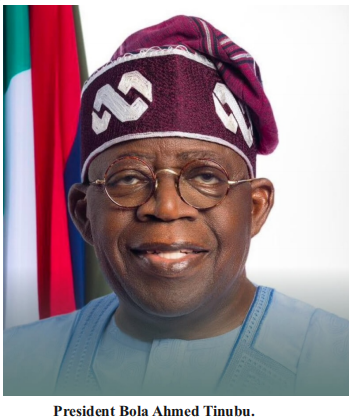
The dynamics of defection are closely tied to the strategies of political elites. Under the leadership of figures such as Bola Ahmed Tinubu, the APC has been widely perceived as adept at political consolidation. Through alliances, negotiations, and strategic outreach, the party has positioned itself as the most attractive destination for ambitious politicians.
At the same time, opposition leaders have struggled to maintain cohesion. Internal disputes within the PDP, for example, have led to parallel power structures and weakened central authority. The Labour Party, despite gaining significant attention during the 2023 elections, has faced organizational challenges that limit its ability to retain and integrate members at scale.
For many Nigerians, the wave of defections reinforces a sense of political cynicism. Voters often view party switching as evidence that politicians prioritize personal ambition over public service. The lack of ideological consistency further deepens this perception. In conversations across cities like Lagos, Abuja, and Kano, citizens frequently express frustration with what they see as a political class disconnected from everyday realities.
This erosion of trust has tangible consequences; lower voter turnout, reduced civic engagement and increased apathy toward political processes are some of them. In the long term, such trends can weaken democratic institutions by reducing public participation and accountability.
Nigeria’s vibrant media and civil society sectors have played a critical role in highlighting the implications of defections. Editorials, investigative reports, and public forums have consistently raised concerns about the concentration of power and the weakening of opposition structures. Also, organizations advocating for electoral reform have called for stricter enforcement of anti-defection laws, clearer constitutional provisions, and greater transparency in political processes.

Some have also proposed innovative solutions, such as mandatory by-elections for defecting legislators, legal restrictions on mid-term party switching, strengthening internal party democracy and while these proposals have gained traction in public discourse, translating them into policy remains a challenge.
Nigeria is not alone in facing the challenges posed by political defections. Similar patterns have been observed in other democracies, particularly in emerging political systems. However, the Nigerian case is distinctive in its scale and impact. Few democracies experience such frequent and large-scale movement of politicians toward the ruling party.
In more established systems, strong party identities, ideological commitments, and institutional safeguards help limit opportunistic defections. Nigeria’s experience underscores the importance of these factors—and the risks associated with their absence.
One of the most serious concerns arising from widespread defections is the potential for institutional capture. When a single party dominates not only the executive branch but also the legislature—and potentially influences the judiciary—the checks and balances essential to democracy can weaken.
This concentration of power increases the risk of policy decisions driven by narrow interests, reduced transparency and limited accountability.
While Nigeria’s democratic institutions remain resilient in many respects, the cumulative effect of defections could gradually erode these safeguards.
Addressing the challenges posed by defections will require a multifaceted approach. Opposition parties must address internal divisions, improve governance structures, and articulate clear policy positions. A strong, cohesive opposition is essential for democratic balance.
Clarifying and enforcing anti-defection provisions could help deter opportunistic party switching. However, such reforms must balance accountability with the right to political association. Enhancing transparency, credibility, and fairness in elections can reduce the incentives for post-election defections.
Empowering citizens to demand accountability from elected officials can create pressure for more responsible political behavior.
The ongoing wave of defections to the APC represents more than a political trend—it is a stress test for Nigeria’s democratic system. On one hand, it reflects the fluidity and adaptability of the country’s political landscape. On the other, it exposes structural weaknesses that, if left unaddressed, could undermine democratic governance.
The challenge lies in finding a balance between political freedom and institutional stability. If defections continue unchecked, Nigeria risks drifting toward a system where electoral competition exists in form but not in substance. But with meaningful reforms, stronger institutions, and active citizen engagement, the country can turn this moment into an opportunity—to reinforce, rather than erode, its democratic foundations.
The consolidation of power within the All Progressives Congress has reshaped the political landscape, raising both opportunities and concerns. For the ruling party, defections signal strength and political dominance. For the opposition, they represent a call to introspection and renewal. For citizens, they pose a deeper question about representation, accountability, and trust.
Ultimately, the future of Nigeria’s democracy will depend not on the fortunes of any single party, but on the resilience of its institutions—and the willingness of its leaders and citizens to uphold the principles that sustain them.
As the lines between opposition and ruling party continue to blur, one thing becomes clear; democracy is not just about winning power, but about how that power is contested, shared, and held to account.